
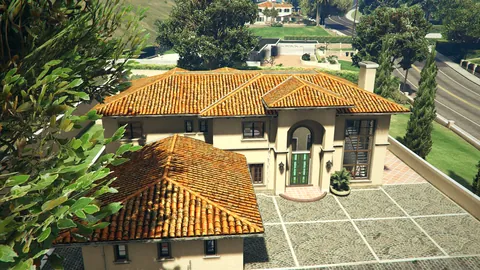
Doors, portals and flickering interiors: a mapper's explanation
Why FiveM interiors flicker, vanish through doorways or show the outside world: how MLO rooms and portals work and what usually goes wrong with them.
NXBy Team NolX
· 4 min read
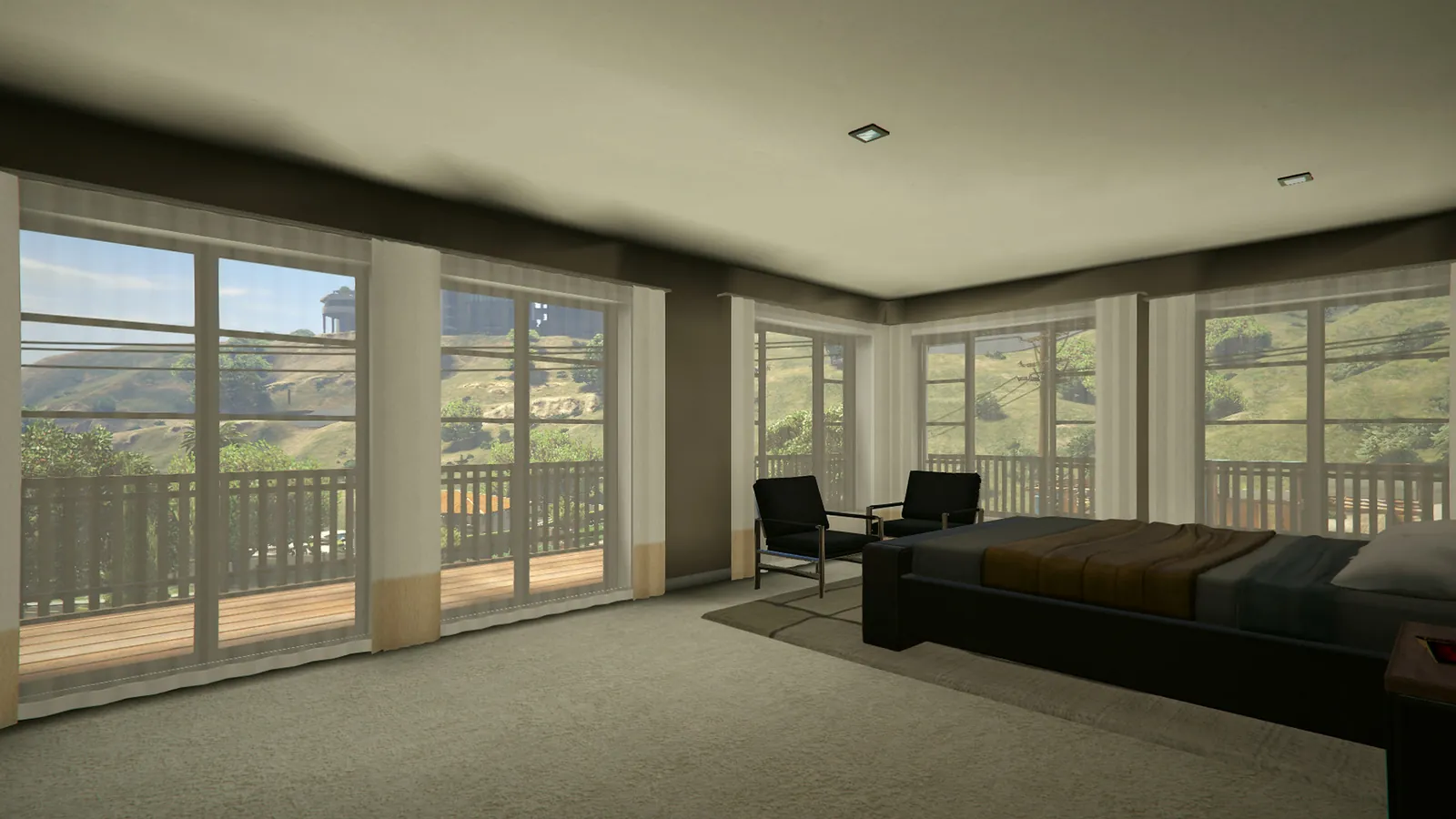
People sometimes assume an MLO is a 3D model dropped into the world. The model is maybe a third of the work. The rest is making the game understand it: which room you are in, what you can see from there, what lights up at night and what can be swapped out. Here is roughly how Team NolX takes a building from an empty lot to a furnished interior.
Everything starts in CodeWalker. We look at the exterior that already exists, or the empty lot, and check what is around it: terrain, roads, neighbouring buildings, vanilla props that would clip through walls. Grapeseed and Sandy Shores are full of small vanilla details that you only notice when your new wall cuts through a fence.
We note the coordinates, the ground height at each corner and the entrances. If the outside does not match the inside, players notice the moment they walk through the door.
Before any detail, we build a grey box in Blender. Walls, floors, stairs, door openings, ceiling height. Then we bring it in-game and walk it with a ped.
This step catches most mistakes. Hallways that feel fine in Blender are often too narrow once a character with a backpack walks through them. Ceilings that look tall can feel cramped in third person. We adjust until the space feels right at player scale, not at camera scale.
For something like Villa Richman at 10,000 sq ft, the blockout alone goes through several rounds, because big houses can easily feel empty and confusing.
Once the layout is locked, we model the real geometry and set up GTA shaders through Sollumz. That means picking the right shader per material, setting up UVs that will hold up with tiling textures, and keeping texture dictionaries reasonable. A furnished house can pull in a lot of textures if you are careless, and that is what makes interiors pop in late on weaker PCs.
Collisions are built separately and kept simple. Players should not snag on a decorative skirting board.
This is the part that separates a working MLO from a pretty one. Every interior is split into rooms, and rooms are connected by portals, which are usually doorways and windows. The game uses them to decide what to render. If you are standing in the kitchen with the door closed, it should not be drawing the bedroom upstairs.
Getting portals wrong gives you the classic symptoms:
We place portals exactly on openings and check each one from both sides.
Then we furnish. This takes longer than people expect, because a room only feels lived-in when the small things are there: mail on a counter, shoes by the door, a half-finished puzzle in a cabin.
Anything that could reasonably change goes into an entity set. Wall and floor styles, furniture layouts, lighting moods, and underground setups like a meth lab, a weed grow room, a moonshine distillery or a secret hideout. Server owners switch them with the standard natives:
local interior = GetInteriorAtCoords(x, y, z)
ActivateInteriorEntitySet(interior, "style_modern")
DeactivateInteriorEntitySet(interior, "style_classic")
RefreshInterior(interior)
The rule we follow is that every combination should look intentional. If two sets can be active together, we test them together.
Lighting is done in passes, not all at once. First the main lights that define the room, then fill lights to avoid black corners, then emissive surfaces like lamps, screens and signs. Finally we set the timecycle modifier per room so the mood is right. Emissive surfaces never replace real lights, they only sell the glow.
We test every interior at several times of day and in different weather. Midday sun through a window, sunset, full night with only interior lights, rain. A room that looks perfect at noon can look like a cave at 10 p.m.
We also test the boring stuff: walking every staircase, sitting on every chair that should be sittable, opening every door, entering from every entrance, and loading in with a fresh cache.
Finally the resource is packed with a clean fxmanifest.lua, the right data files and nothing extra. It is standalone, so it runs on ESX, QBCore, QBox or anything else, and it is delivered through Cfx.re like every resource on the store.
That is the whole loop. It is slow, and it should be. Players will spend hundreds of hours in these rooms, so it is worth getting them right.
Keep reading
Why FiveM interiors flicker, vanish through doorways or show the outside world: how MLO rooms and portals work and what usually goes wrong with them.
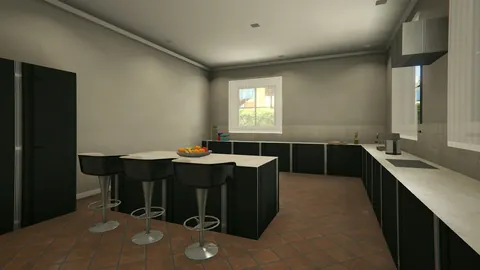
How we light FiveM MLOs so they hold up at noon and at 3 a.m.: real light sources, emissive shaders, per-room timecycle modifiers and the mistakes to avoid.
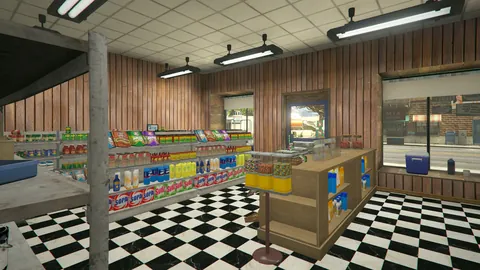
Occlusion lets GTA V skip geometry hidden behind walls and terrain. Here's how it works, why custom maps break it, and what that means for your server's FPS.